


Understanding Overthinking and Its Impact on Sleep
What Causes Overthinking at Night?
Overthinking before sleep often stems from the quiet and solitude of the night. As distractions fade, unresolved thoughts and worries surface more vividly. Stressful events, daily problems, or future uncertainties can trigger a cycle of repetitive thinking. This mental activity makes it difficult to relax, leading to a restless mind just when the body seeks rest.
How Overthinking Disrupts Sleep Patterns
When the mind is overloaded with thoughts, the natural process of falling asleep slows down. Overthinking can increase heart rate and generate anxiety, which interferes with the transition into deep and restorative sleep. This disruption can lead to fragmented sleep, reduced sleep duration, and poor sleep quality overall, leaving the body and mind tired the next day.
Introduction to Mindfulness for Better Sleep
The Science Behind Mindfulness and Relaxation
Mindfulness involves paying deliberate attention to the present moment without judgment. Scientific studies reveal that mindfulness activates the parasympathetic nervous system, which helps reduce stress and calm the mind. This physiological change supports relaxation, lowers blood pressure, and encourages the body’s natural sleep processes.
Benefits of Practicing Mindfulness Before Bedtime
Incorporating mindfulness before sleep promotes mental clarity and emotional balance. It allows individuals to observe thoughts without becoming overwhelmed by them. This practice helps break the cycle of rumination, making it easier to release worries and prepare the mind for restful sleep. Regular mindfulness can enhance overall sleep quality and contribute to better daytime focus.
Effective Mindfulness Techniques to Calm the Mind
Breathing Exercises to Release Tension
Simple breathing exercises can anchor attention and reduce mental chatter. Techniques like slow, deep breathing or paced breathing encourage relaxation by regulating the breath. Focusing on each inhale and exhale shifts the mind away from stressful thoughts, creating a peaceful mental state conducive to sleep.
Body Scan Meditation: Connecting Mind and Body
This technique involves mentally scanning the body from head to toe, noticing areas of tension or discomfort. By bringing gentle awareness to physical sensations, body scan meditation fosters a connection between mind and body. This process promotes physical relaxation and helps distract from intrusive thoughts, easing the transition into sleep.
Guided Imagery for a Peaceful Mind
Guided imagery encourages the imagination to create calming scenes or experiences. Visualizing serene environments, like a quiet beach or forest, can replace stressful thoughts with positive images. This mental escape helps reduce overthinking and fosters tranquility before sleep.
Incorporating Mindfulness Into Your Nightly Routine
Creating a Mindful Sleep Environment
Setting a peaceful environment supports mindfulness practices. Dimming the lights, reducing noise, and maintaining a comfortable room temperature prepares the body for rest. Removing distractions helps the mind focus on relaxation techniques rather than external stimulation.
Timing and Consistency: When and How Often to Practice
Practicing mindfulness consistently at the same time each evening reinforces the habit. Spending even five to ten minutes before bed can make a meaningful difference. Developing this routine signals the brain to wind down and primes it for restful sleep.
Additional Tips to Complement Mindfulness and Limit Overthinking
Journaling to Clear Your Mind
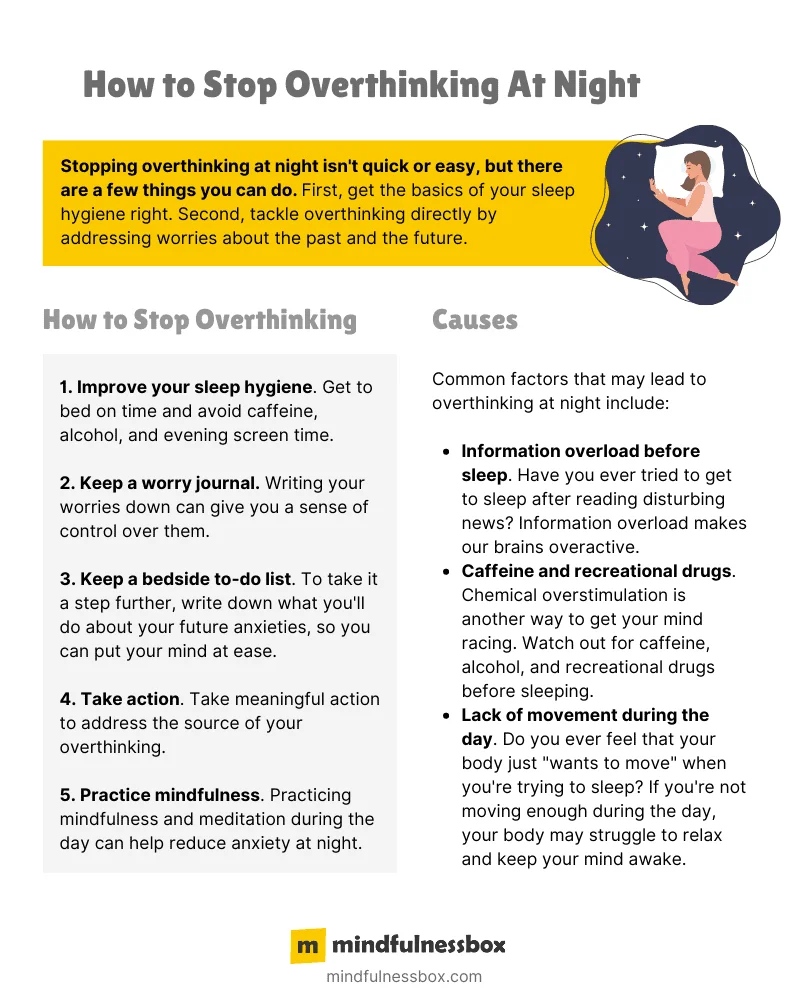
Writing down thoughts or worries before bed can help release mental clutter. Journaling provides an outlet for emotions and can reduce the urge to ruminate. This simple practice often complements mindfulness by creating mental space for calmness.
Limiting Screen Time and Stimulating Activities
Avoiding screens and intense activities close to bedtime prevents overstimulation. The blue light from devices can interfere with natural sleep cycles, while engaging content may provoke active thinking. Choosing calming activities instead supports relaxation and mindfulness practice.
Using Aromatherapy and Gentle Sounds
Incorporating soothing scents like lavender or chamomile and gentle soundscapes can enhance the mindfulness experience. These sensory elements promote a tranquil atmosphere and help guide the mind away from overthinking, easing the path to restful sleep.