


Understanding the Need for Daily Stretching
How Desk Work Affects Your Body
Sitting at a desk for extended periods can create a unique set of challenges for the body. When you remain seated for hours, muscles tend to tighten, especially around the neck, shoulders, and lower back. This posture often leads to stiffness and discomfort, as the spine can become compressed and the muscles less flexible. Over time, this can contribute to poor circulation and even impact your overall energy levels. Recognizing how these physical effects accumulate is the first step in appreciating why a daily stretching routine is essential for desk workers.
Benefits of a Consistent Stretching Routine
Maintaining a regular stretching practice brings a range of benefits that go beyond just relieving immediate stiffness. Stretching increases blood flow to muscles, which helps deliver nutrients and remove waste products. It also enhances flexibility and joint mobility, reducing the risk of strain during daily movements. By improving posture and muscle balance, stretching can alleviate tension headaches and reduce pain that stems from prolonged sitting. Establishing this habit consistently offers gradual improvements in comfort, focus, and physical wellbeing throughout the workday.
Essential Principles for Effective Stretching
Warm-Up Tips Before Stretching
Before diving into stretching, it’s important to prepare your body properly. Warming up increases muscle temperature and elasticity, which helps prevent injury during stretching. A simple way to warm up at home can include light activities such as marching in place or gentle arm swings for a minute or two. These movements are enough to elevate your heart rate slightly and get circulation moving without causing fatigue. This preps muscles to respond positively to stretching and maximizes the benefits of your routine.
Safety Guidelines to Prevent Injury
Stretching should never be painful. It’s essential to listen closely to your body and avoid pushing beyond comfortable limits. Maintain steady, controlled movements and hold each stretch without bouncing. Bouncing can cause muscle strain or tears, especially if done abruptly. Also, avoid stretching cold muscles; if you’re just waking up or have been completely inactive, warm up first as mentioned earlier. If you notice sharp or sudden pain, stop immediately and reassess your technique. Practicing safe stretching prevents injuries and ensures you can maintain your routine daily without setbacks.
Step-by-Step 10-Minute Stretching Routine
Minute 1-3: Neck and Shoulder Stretches
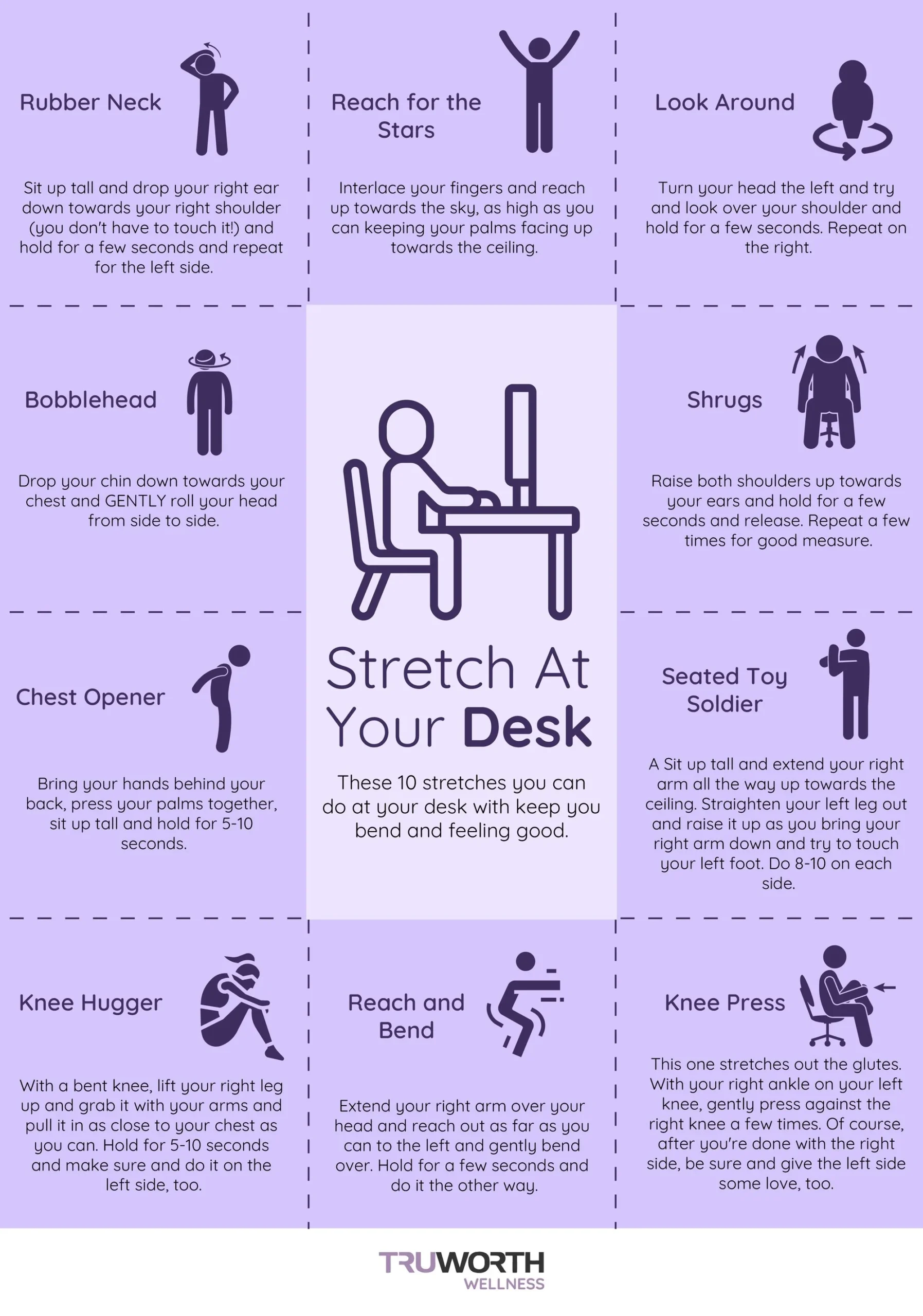
Start by addressing the areas most affected by desk work — the neck and shoulders. Begin with gentle neck tilts, slowly moving your ear towards your shoulder on each side, holding for 15 to 20 seconds. Follow this with shoulder rolls, moving the shoulders upwards, backwards, and down in a fluid motion to release tension. Another effective stretch is clasping your hands behind your back and gently lifting to open the chest and shoulders. These movements loosen tight muscles and improve circulation around the upper body.
Minute 4-6: Back and Spine Mobility
Next, focus on increasing mobility in your back and spine. Perform seated or standing spinal twists by rotating your upper body slowly from side to side, maintaining a straight spine. You can also do cat-cow stretches, either on the floor or standing, which involve arching and rounding the back sequentially to mobilize the vertebral joints. These exercises help counteract the hunched posture from desk sitting and promote better spinal alignment.
Minute 7-8: Lower Body Activation
Shift your attention to the lower body, which often suffers from tight hip flexors and hamstrings due to prolonged sitting. Standing hip flexor stretches, where you step one foot forward and gently push hips forward, open up this crucial area. Incorporate hamstring stretches by extending one leg forward with a slight bend and reaching toward your toes, keeping your back straight. Activating and stretching the lower body prepares your legs for movement and reduces discomfort from stiffness.
Minute 9-10: Final Full-Body Relaxation Stretches
Conclude your routine with stretches that encourage full-body relaxation. Forward folds help release tension from the back and legs while calming the nervous system. Deep, slow breaths during these stretches enhance relaxation and increase oxygen flow. You might also perform gentle side stretches by reaching one arm overhead while leaning gently to the opposite side, elongating the torso. These final movements leave you feeling refreshed and ready to return to work with improved posture and vitality.
Incorporating Stretching into Your Workday
Tips to Stay Consistent
Embedding a 10-minute stretching routine into a busy day can be a challenge, but it’s achievable with mindful planning. Try to perform your stretches at the same time every day, such as morning before starting work or during a mid-afternoon break. Consistency helps build the habit and signals to your body when to expect the activity. Additionally, view stretching as a mental reset, not just physical exercise. This mindset can motivate you to keep going even on hectic days, as the short routine provides a chance to refocus and alleviate built-up stress.
Using Reminders and Apps

Technology can be a helpful ally in maintaining a daily stretching habit. Setting reminders on your phone or computer ensures you don’t forget to take those crucial breaks. Many apps specifically designed for office workers offer guided stretch routines and track your progress over time. Using these tools helps incorporate accountability and variety to your practice, keeping it engaging and effective. Experiment with different methods to discover what best supports your lifestyle and encourages regular movement.
Additional Resources for Desk Workers
Recommended Stretching Tools and Equipment
While a 10-minute routine requires minimal equipment, several tools can enhance your stretching experience. A yoga mat provides comfortable cushioning when performing floor stretches, reducing discomfort. Resistance bands offer gentle assistance in deepening stretches without strain. Foam rollers are also valuable for releasing muscle tightness and improving circulation around key areas such as the back and legs. These items are generally affordable and easy to integrate into a home or office environment.
Guided Videos and Mobile Apps
For those who prefer visual or interactive guidance, numerous online platforms feature stretching routines tailored for desk workers. These videos often demonstrate proper form and pacing, which can be especially helpful when starting out. Mobile apps can deliver customized programs that adapt to your progress and preferences. Exploring these resources can offer structured support and variety, making it easier to stay committed and maintain good stretching habits over time.